
Facilities
Beauty and Wellness Lab
Vocational Education
Vocational education is designed to provide students with practical skills and knowledge related to specific trades. The state offers a variety of vocational courses, including diploma and degree programs, to cater to the needs of the industry. The courses are non-academic and are closely related to specific vocations or trades, helping individuals acquire the necessary skills for employment.
The Directorate of Employment & Craftsmen Training in Meghalaya has empanelled various training partners across different sectors, including agriculture, automotive, beauty & wellness, construction, electronics, healthcare, handicrafts, IT-ITES, infrastructure, iron & steel, media, entertainment, security, textiles, handloom, tourism, hospitality, management, retail, rubber, logistics, power, capital goods, telecom, and more.
The Pradhan Mantri Kaushal Vikas Yojana (PMKVY) is a flagship scheme aimed at enabling Indian youth to take up industry-relevant skill training, helping them secure a better livelihood. The scheme encourages and promotes skill development for the youth throughout the country, aligning itself with common norms and guidelines.
Meghalaya's vocational education system is also part of the broader efforts to integrate vocational education with general education, as recommended by the National Education Policy (NEP) 2020. This integration aims to ensure that vocational skills are incorporated into the school and higher education curricula, with a goal of achieving 50% vocational education exposure for learners by 2025.
Vocational Subject in School
Vocational subjects in schools are designed to provide students with practical skills and knowledge relevant to specific industries or professions. These subjects are typically offered in the form of courses that focus on skill development rather than traditional academic subjects. Here are some key points about vocational subjects in schools:
•Skill-Based Education: Vocational subjects teach skills that are directly applicable to the job market, preparing students for careers in various fields such as IT, healthcare, hospitality, beauty & wellness and more.
•Career Preparation: These subjects aim to equip students with the necessary skills to take up a profession right after completing their education, offering job profiles like stenographers, web developers, and floriculturalists.
•Practical Training: Vocational courses often include practical classes and skill development training, providing hands-on experience that is crucial for success in the job market.
•Specializations: Students can choose from a variety of specializations, such as software development, food processing, interior design, and more, allowing them to tailor their education to their interests and career goals.
•Entry Points: After completing vocational courses, students have multiple entry points into the job market, including the option to pursue bachelor-level vocational courses for further specialization.
Vocational subjects play a crucial role in bridging the gap between education and the job market, ensuring that students are well-prepared for the challenges of the modern workforce.
VSHSE Vocationalisation of Secondary & Higher Secondary Education [also known as NSQF]. National Skills Qualification Framework - is a quality assurance Framework, organizing Qualifications according to levels of competencies (professional knowledge, professional skills, core skills and responsibilities). Based on National Vocational Education Qualification Framework (NVEQF) – a framework that defines series of levels of knowledge along with skills, Occupational Standards. Vocational Education implemented in close collaboration with stake holders – includes Vocational Training Partners, RMSA, DEOs/DPCs, School Heads, related Industries, SSCs and NSDC; State Education Board/Sector Skill Councils (SSCs) for assessment, certification and training.
Meghalaya’s vocational education has been started since 2017, in Government and Government aided schools. Two Trades are offered in each school, the course run for four years from Class IX-Class XII pertaining to a Qualification Pack prescribed by the Sector Skill Councils. It offered as an optional subjects for the students starting Class IX and X and as Elective subjects for Higher Secondary school with different level of job roles and qualification pack. Marks allotted for the Board Exam are 50 marks for Practical, 30 marks for Theory and 20 marks for the internal, total out of 100 marks. The MBOSE will conduct the theory exam, whereas the Sector Skill Council (External) will conduct the practical exam through online of offline mode.
KJP Synod Sepngi Higher Secondary School, Vocational Education has been implemented in 2024 along with two trades, IT/Ites and Beauty & Wellness.
BEAUTY & WELLNESS Trade.
Beauty and wellness refer to interconnected concepts that encompass both physical and mental health.
Beauty is often defined as aesthetically pleasing characteristics, but it goes beyond physical perfection, including emotional and spiritual health.
Wellness, on the other hand, is a holistic approach to health that includes practices such as maintaining a balanced diet, staying hydrated, managing stress, and ensuring adequate sleep.
The relationship between beauty and wellness is significant; when individuals prioritize their overall health, it often reflects in their appearance, leading to a healthier and more vibrant look.
In essence, beauty and wellness are inseparable, as feeling good about oneself contributes to one's appearance, and appearance can enhance one's sense of well-being.
Job Role - Beauty Therapist
The outward appearance of a person is the first thing that catches the eye of others. Therefore, being presentable at all times is of considerable importance. Here, comes the role of a Beauty Therapist, they carries out various beauty treatments on a person to improve the overall appearance, which includes dressing-up appropriately, putting the right make-up, skincare and hairstyle. Besides, the therapist gives wellness treatments, including manicure and pedicure, which involve massage, followed by aftercare advice to clients. Sometimes, they are also suggested a balanced diet and nutrition, and a daily exercise regimen to maintain a healthy lifestyle.
Courses---Class IX and X, Job Role (Assistant Beauty Therapist)
•Beauty and Wellness Industry, and Beauty Therapy
•Manicure, Pedicure and Mehendi
•Haircare
•Basic Skincare Services
•Basic Depilation Services
•Basic Make-up Application
•Creating a Positive Impression
•Communication Skills.
Class XI and XII, Job Role (Beauty Therapist)
•Beauty and Wellness Industry, and Beauty Therapy
•Skincare services
•Manicure and pedicure services
•Depilation services
•Make-up services
•Facial duty services
•Salon Reception Duties
•Creating Positive Impression at workplace.
•Communication Skills.
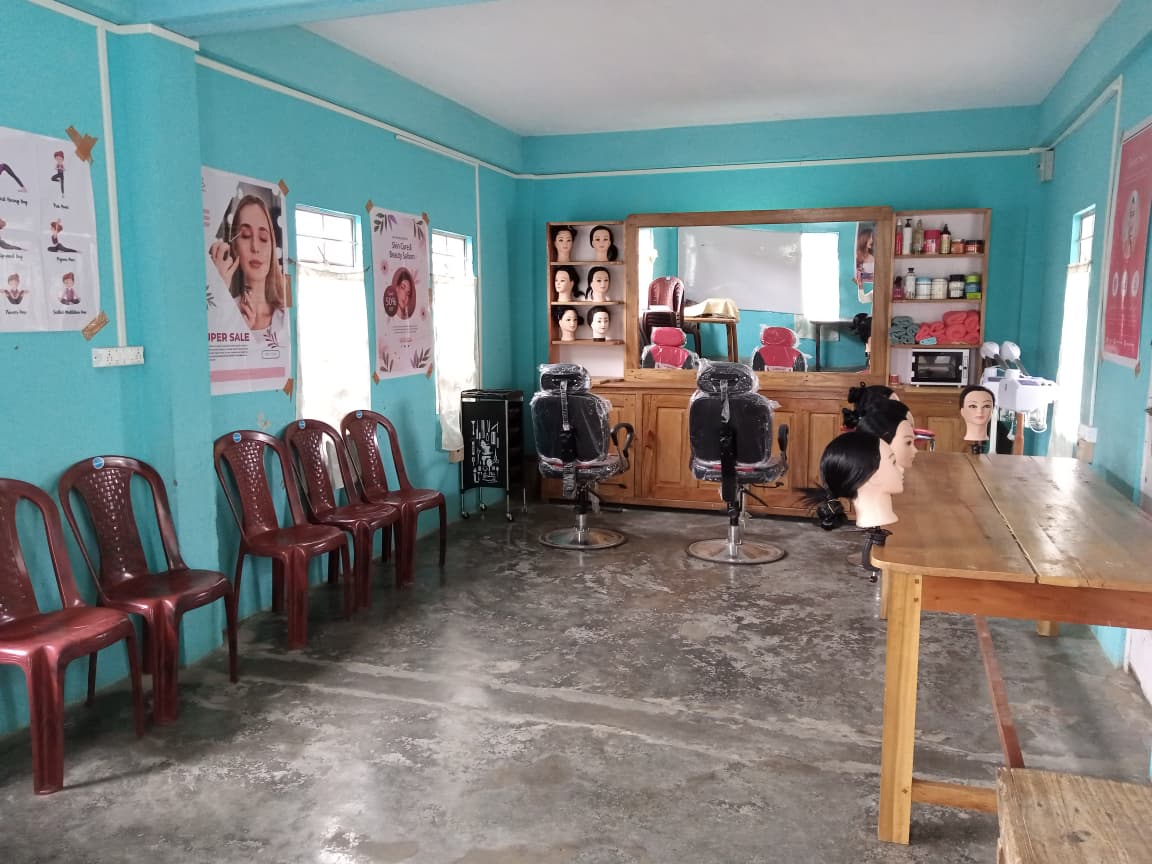
Beauty and Wellness Lab